


We can find side by side the traditional bull, a replica of the bull in the Museum of Cuenca from the 7th century, more traditional pieces of popular pottery and more avant-garde designs, where we can see the influence of the Museum of Abstract Art.

There are also other important crafts like rug-weaving, toy-making, gold and silverware, engravings, forging, wood carving, leatherwork and saddle-making, stained-glass design, artistic bookbinding and papermaking.
in the capital of the province, we can also find interesting examples of crafts from other parts of the province; wicker from the pan of the Alcarria within the borders of Cuenca, rugs and musical instruments from Casasimarro, pottery from Mota del Cuervo, etc.
 Holy Week is celebrated in the incomparable frame of the old town, in the labyrinth of its narrow streets, and is the most important festivity in Cuenca. These celebrations date back to the l7th century at the very least and are recommended by international tourist boards along with the Religious Music Festival.


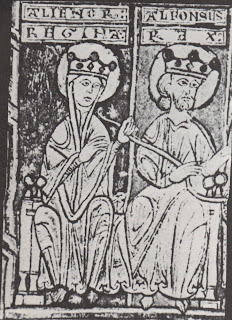
Alfonso X the Wise granted Cuenca the title of town during the second half of the l2th century. Throughout the Early Middle Ages, the town underwent a period of splendour due to the strength of its textile industry, trade in wool, its craft industry and cattle. There was also an important glass industry, paper industry and coins were minted here.

As for ideological control, there was a Tribunal of the Inquisition in Cuenca from 1489. In the Community wars (1520-22), the town of Cuenca, whose population consisted mainly of noblemen and craftsmen, initially supported rebel Toledo, but it was not as strong as Toledo and soon gave in to Charles V.
During the l4th century, Cuenca developed an important wool trade, which suffered a serious crisis at the beginning of the l7th century, and this is reflected in the population, which dropped from 12,000 in 1591 to just over 3,000 in 1640.

Throughout the whole of the l7th century it was impossible to stop the decline in the cattle-raising industry and the wool industry and in the l5th century Bishop Palafox tried to overcome the crisis by setting up a carpet and cloth factory.
During the Wars of Independence, Cuenca was sacked by French troops and recovered later by the troops, among others, of Juan Martín the Stubborn. The town suffered further military attacks during the third Carlist war (1873).


